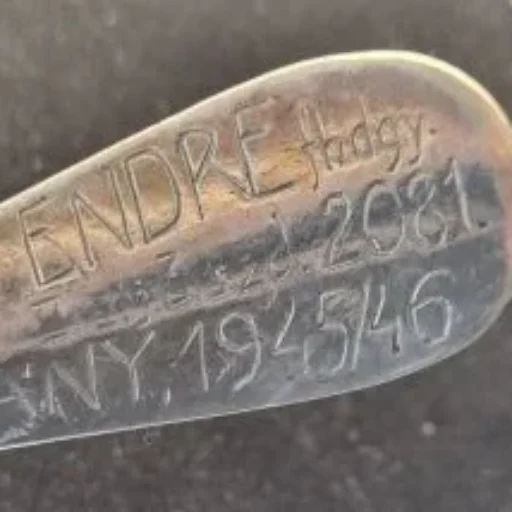
Andras Kovács (Bandi) Budapest WW2 1945
András aged 12 in 1944 and at the end of the Siege of Budapest on 13 February 1945 , was a Levente youth who served as an auxiliary/courier alongside Honvéd units during the Siege of Budapest.
Levente membership was state-run, and supervised by the Ministry of Defence.
By late 1944 in Budapest, Levente boys were often:
-
Attached informally to Honvéd units (especially where a parent was an officer)
-
Used as couriers, messengers, orderlies
-
Present in military locations without formal enlistment
Andras Kovacs (Bandi) Got hit with shrapnel – 16 January 1945
We sprint toward the stables, already engulfed in flames. Nearby, Bondi lies on a stretcher, his cries cutting through the chaos. A jagged fragment of shrapnel has severed part of his left finger.
Lilla kneels beside him, pressing handfuls of snow against the wound in a frantic attempt to slow the bleeding.
The roar of a motorcycle breaks through the noise. Lieutenant Pálházi arrives, lifts Bondi carefully into the sidecar, and speeds off toward the 11th Honvéd Hospital.
Gradually, the blaze inside the stable is brought under control. Armed with a pistol, a sergeant crawls beneath the collapsed beams and twisted timber and, with grim resolve, ends the suffering of the trapped horses — our fallen four-legged comrades.
Upon Reflexion
In 1966 aged 7, I asked my father Andras about the choices he was forced to face as to removal of his left pinky. I sensed a sense of despair in raising this as a question. Only later I realised what a traumatic decision this was that effected him for the rest of his natural life. He was initially given 3 choices; hand amputation versus loss of 3 fingers or loss of 1 finger with 2 not so functional fingers. The removal of left pinky was the toughest choice ever made.
A Father’s Choice
One of the most striking details of Endre’s experiences is that his 12-year-old son, Bandi stayed with him at the headquarters throughout the siege. Bandi was wounded by Soviet artillery fire while working as a horse groomer in the horse stable, got hit by Soviet shrapnel and consequently had to have his left hand pinky finger surgically amputated —a testament to how the siege blurred the lines between the front line and family life.
My father Bandi, did say that he was a dispatched runner and was in the thick of it all.
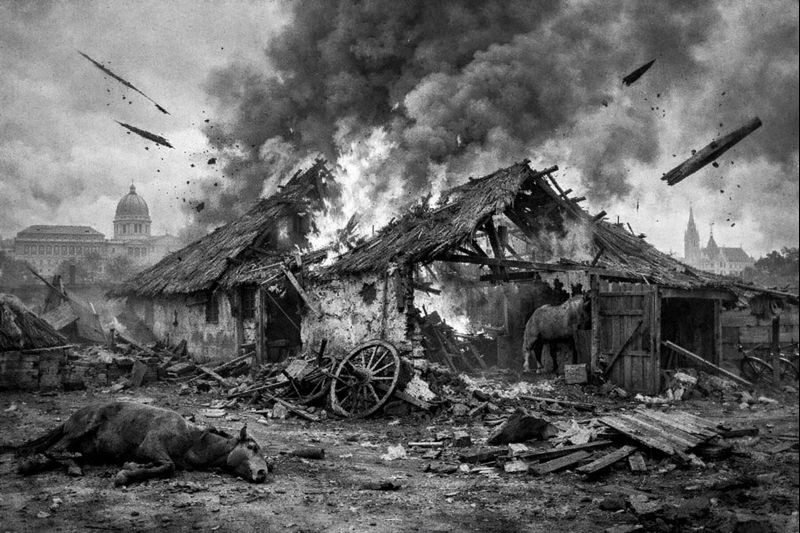
Bandi Hit :Extract from book "Boy Soldier" by Ervin v, Galántay 1944-45 page 116:
"Ervin! The stables go hit, the horses .... Kovács Bandi!"
We run to the burining stables, a bucket chain-is forming to put out the fire. Bandi is lying on a stretcher, screaming. A shard tore of his left pinky finger. Lilla is trying to stop the bleeding, packing snow on it. Lieutenant Pálházi arrives on a motorcycle, places Bandi in the side-car and drives towards the 11th Honvéd Hospital. The flames in the stable are under control. With a pistol in hand a sergenat climbs under the collapsed roof structure and puts an end to the suffering of our four-legged comrades".
Bandi having been wounded by shrapnel resulting in the loss of left pinky finger and was taken to the 11th Honvéd Hospital which included associated cellar wards operating in the Krisztinaváros–Castle Hill area. Due to the collapse of medical administration during the siege, wounded minors were often recorded informally or not at all.
Bandi's wounding, together with Lieutenant Kovács’s illness, explain for Endre's inability to participate in the February 1945 breakout. At the time of the failed Buda breakout Endre was subsequently captured as a prisoner of war by the Soviets and taken to a gulag
Endre and Bandi Captured at Seige of Buda 13 February 1945
Bandi’s wounding, together with Lieutenant Kovács’s serious illness, made it impossible to participate in the February 1945 breakout. At the time of the failed Buda breakout Endre was sadly subsequently captured as a prisoner of war by the Soviets and taken to a gulag